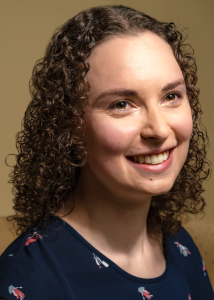
Health literacy, the skills we need to interpret health information and make health decisions, is an increasingly important topic. Afterall, Canadians tend to have low health literacy, and this is linked to poorer health outcomes and higher healthcare costs.
Samuel Harder and Sergiy Shatenko (IMP Class of 2019) have suggested a possible solution to the issue in their article “Why you should Mini-Med School: Mini-Med School as an intervention to increase health literacy,” published in the Canadian Medical Education Journal.

L – R: Sergiy Shatenko and Samuel Harder (IMP Class of 2019)
Sergiy and Samuel found that elderly participants significantly improved their health literacy after attending Mini-Med School, a six-lecture series delivered by medical students at the University of Victoria’s Medical Sciences Building. The lectures focused on topics that often come up in primary care, including disease prevention, navigating the healthcare system, understanding medical testing, brain health, and heart health.
The participants, who were part of the University of Victoria Retirees Association, improved in seven of nine health literacy scales when they took the Health Literacy Questionnaire six weeks after the lecture series.
Along with showing that Mini-Med School can be an effective tool to increase health literacy, the paper discusses the potential of the lecture series as a way for Canadian medical schools and students to engage with their communities.
Sergiy and Samuel conducted the research for this paper as their second-year FLEX project under the supervision of Dr. Jane Gair. Prior to publication, they presented their work at the Canadian Conference on Medical Education in 2019.
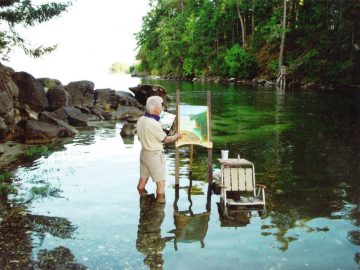 Dr. Ross practiced medicine for 60 years. An ear, nose and throat specialist, his Vancouver Island practice focused on highly demanding and complex care of patients with head and neck cancers. He also served as Chief of Surgery at the Royal Jubilee Hospital, President of the Victoria Medical Society, a consultant at the Cancer Clinic and the Island Health Pain Clinic, and a teacher at the Island Medical Program. He finally retired at 85 years old last October before passing away in December.

 “I am very excited to take on this new challenge as Associate Director of Curriculum for Years 1 & 2,” she says. “We are living in challenging and difficult times, but our current circumstances have also created lots of opportunities for our program to grow and pioneer less-traditional teaching approaches, and I am excited to be part of this process. As we navigate the challenges and opportunities that the next couple of years will bring us, I feel very fortunate to work with such dedicated faculty, staff, and students across the four sites of our distributed medical program!”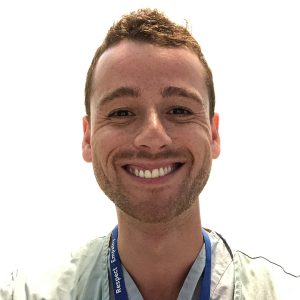
 “Your health and safety is of utmost importance, so you will not be asked to volunteer in-person until it is safe to do so,” says Karen Basi, Patient Program Coordinator. “We will only restart the in-person aspects of the program when the provincial health officer allows, and we will heed all best practices to ensure your health and safety when that time comes.”